

Hi, my name is Debra – and I’m a redeemed perfectionist. 😂 🩵
One day about a decade ago, I broke up with perfectionism. Boys and girls, I’m not kidding, but I am chuckling at myself! For years now, I’ve been claiming the title of ‘redeemed perfectionist’ because it has powerful and personal meaning for me. And interestingly, serves several things in my creative journey:
… it reminds me that there is a ‘cost’ to perfectionism, yet freedom is redeemable
… it acknowledges that perfectionism may still hop in the car, but its driver’s license is permanently revoked
… it shouts in dire moments: ‘“excellent and done is good enough, you!”
I’m gonna go out on a limb here and guess that many reading this – yes, maybe even you – have wrestled with this dubious monkey in your studio or creative practice. And if you can relate – even a little – to struggling with perfectionism, then read on. Today is your lucky day. Today, I bring hope!
So, let me ask you …
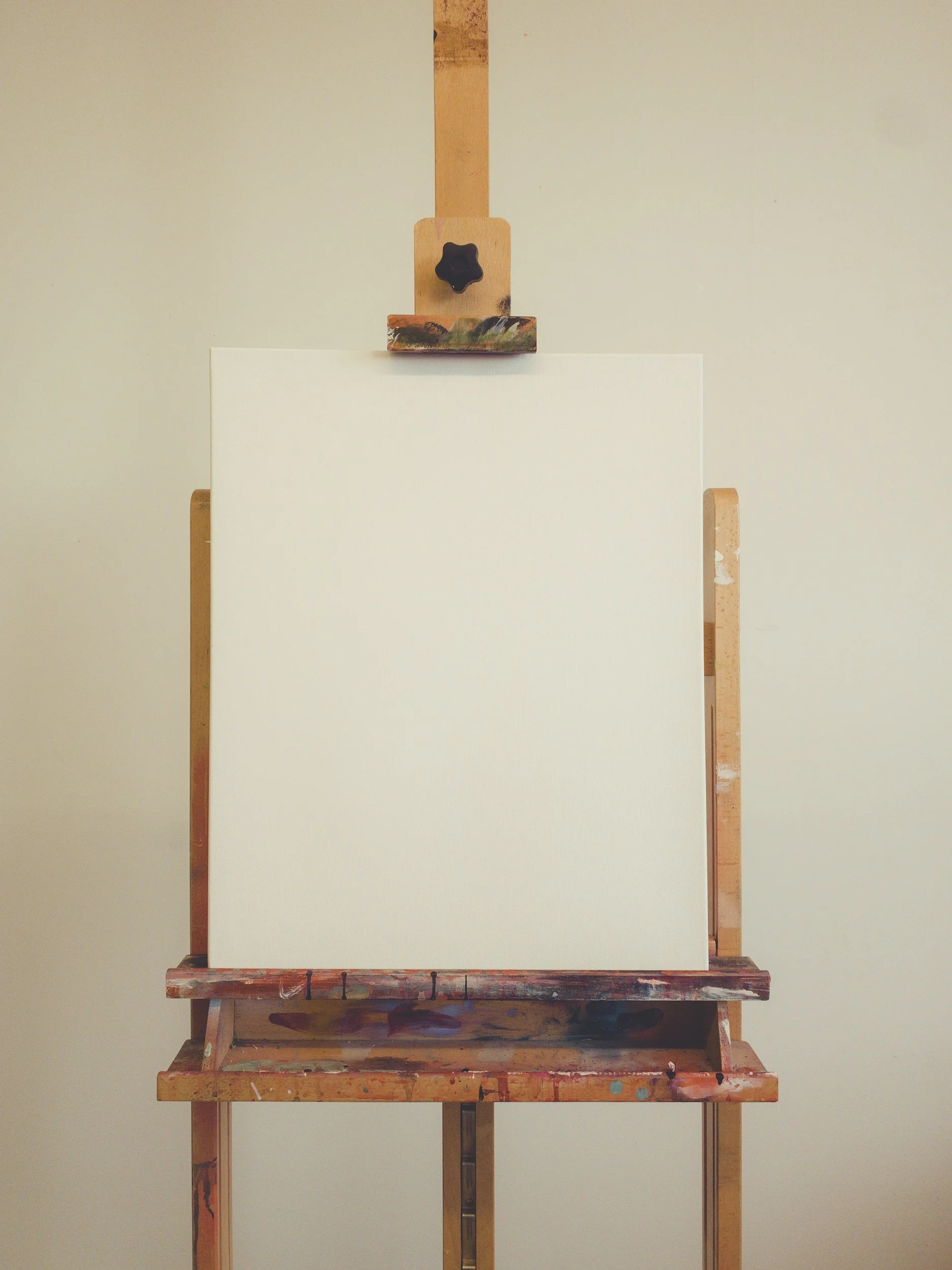
… Do you know what it feels like to stand frozen in front of a blank canvas [or staring at a blank page or computer screen] because you’re afraid your particular brand of ‘art’ won’t be good enough?
… Are you familiar with the inner voice that says, “What if it’s not perfect?” “What if I fail again?” “I can’t afford to ‘waste’ all these art supplies – why bother?”
… Have you ever found yourself endlessly scrolling your social media feed, binge watching a tv show, playing 100 levels on a video or phone game, cleaning unendingly [do people really do that?! 😂] - all in a pitiful attempt to avoid going to your creative space and doing, well, anything?
Oh Lawdy, I sure do, I sure am, I sure have! And I’ve lived in that tight space where creativity can’t breathe—where nothing ever feels finished or worthy.
I’ve also learned how to break up with perfectionism. And while it’s not always a ‘clean break,’ [code word for ‘perfect break’] it is an important and healing journey—one that leads to freedom, joy, and authentic creative expression.
Four Creative “Perfectionist” Types
Over the years working as a fine artist, creativity and spiritual coach, and workshop instructor, I’ve noticed that in creative people, perfectionism shows up in different ways, and also has different causes. Artististic people are particularly prone to it, as are firstborns – but that’s a blog post for another day 😁
Sometimes just identifying and acknowledging the patterns can help us disarm their power. Here are four types of artistic perfectionism I’ve encountered—in others, and yes, in myself too.
Creative Perfectionist Type 1: High Internal Standards + High Creative Skill
This kind of perfectionism shows up when you’ve developed strong artistic skills and have set high expectations for yourself. You’ve created your own standards—and they’re sky-high. You have a clear idea of what your art should look like, and anything less feels like failure.
But here’s what I’ve learned: that pursuit of perfection can drain the joy right out of your creative process. You end up missing the freedom and spontaneity that art is supposed to bring. At times I’ve lived in this space, constantly critiquing my own work, never quite satisfied.
❑ ACTION ITEMS: If this is you, try practicing for 30 days:
#1 - Celebrate progress rather than perfection: It’s important to look for and acknowledge the WINS, no matter how small! Do it regularly. You can ask yourself – aloud, or write it down: Did I learn a new skill? Overcome a roadblock? Actually get to the latest piece? Finish something? Press through when I didn’t “feel” like it? Try something new?
Then to do it regularly! Bonus/rapid change tip: Speak it aloud and write it down.
#2 - Create a “Permission to Fail” Ritual: Start your art [or writing or sewing or…] sessions by saying aloud or writing a quick affirmation, such as: “I give myself permission to create imperfectly and to learn.”
Boom! This simple act can rewire your brain to expect growth rather than flawlessness.
Creative Perfectionist Type 2: High Internal Standards + Developing Skill
This is the version I probably struggled with most as a developing artist. You see the vision clearly—you know what you want your art to look like—but your current skills just aren’t there yet. Instead of giving yourself permission to learn and grow, you get frustrated and discouraged. You might hear yourself saying, “I’ll never be good enough” or “I’m just not talented” or “This is so frustrating! Look at all the time and supplies I wasted.” This type is the most likely to quit making before the actual creative breakthrough hits! The truth is, however: nobody arrives fully formed. Even the most talented artists had to train, struggle, experiment, and fail their way forward.
When I began to embrace my learning curve instead of resisting it, everything changed. I became more playful, more curious, and waaaaaaay more open to growth.
❑ ACTION ITEMS: If this is you, try practicing for 30 days:
#1 - Embrace Your Learning Journey: Replace negative self-talk whenever you become aware of it. As a Christian, you can access the Lord to help you with this! Instead of “I’m just not that talented” say aloud, “I’m learning and growing” or “I’ve got this! I know the Lord is with me.” You’re replacing neuropathways – so be patient, this will take time! Growth is messy and nonlinear—and that’s also how creativity works. When you accept that developing your skills takes time and practice, you open the door to curiosity, fun, and playfulness. And better yet, because you can’t WAIT to get to your studio instead of dreading it, you’ll create more and your skill will develop even faster as you go!

#2 - Set Small, Achievable Goals: Break down your creative process into bite-sized steps. Instead of aiming to create a perfect finished piece right now, focus on mastering one small technique, experiment with a color palette, write an outline or a character study for the book, etc. And as noted in the previous section - celebrate those small wins as very real progress! You will build momentum this way.
Creative Perfectionist Type 3: High External Expectations + High Skill
Sometimes, perfectionism doesn’t come from within—it’s handed to us. Maybe a parent, family member, teacher, mentor, gallerist, juror or even a critic planted the idea that our work was never (or never will be) good enough. Or that your style of creating is not a good fit in “their” world. While the latter may be true, it doesn’t mean your style of creating is “wrong” or “bad” if you'r skill-set remains high. The truth is that even when you’ve developed high skill as an artist, there are times when you still feel like you’re falling short. If you’ve experienced this, you know how painful it can be. It’s not just about your art—it becomes about your worth.
One of the most healing things I ever did was to make messy, loose, imperfect art—on purpose. I gave myself permission to create just for the joy of it. And in that space, the old voices lost their power. My creativity got louder, and my confidence started to grow. I will often refer to my favorite artist quote: "If you hear a voice within you say 'you cannot paint,' then by all means paint, and that voice will be silenced." (Vincent Van Gogh)
#TRUTH!
❑ ACTION ITEMS: If this is you, try practicing for 30 days:
#1 - Identify the Origin: Take time to ask yourself: Whose voice am I hearing when I feel like my art isn’t enough? Then journal about it! It is incredibly helpful to journal while reflecting on where those expectations started. Naming it helps you begin to release it. Ask yourself and write down: What did I first believe about creativity, talent, or success—and who taught me that? And as Christians, we forgive the person(s) who might have first introduced the negative beliefs, and release them to the Lord’s care.
I did this years ago because the Lord revealed to me that I had a close family member who originated a lie in my childhood that I wasn’t worth investing in artistically because other people were more important. The Father was so kind to show me the exact time, place, and conversation with them. It truly surprised me because I realized I had long-buried the painful memory, and it had affected so many of my future decisions about being an artist. So I walked through the process introduced by Restoring the Foundations, known as the “5Rs.” It goes something along the lines of: Recognize the lies, Repent for agreeing with the lies, Replace the lies with God’s truth, Reinforce the truth through Biblical affirmations, Rejoice through gratitude). It was powerful, and something I keep in the back of my journal and Bible for those times that this very thing pops up. My friend, there’s such freedom in doing this!

#2 - Separate External Voices from Your Own Inner Voice: Perhaps you’ve spent years trying to live up to someone else’s standard. But that’s their lens—not yours. It’s time to begin hearing your own creative voice speak up. Journal by writing down the answers to these questions: What do I love to create? What brings me joy in the process? If no one were watching, what would I make today?
I love how you can begin to hear your own creative voice again, and set aside the other ‘voices’ you’ve allowed to take precedence over your own. This is not a judgment, this is freedom – for you!
Creative Perfectionist Type 4: High External Expectations + Developing Skill
This is easily the most vulnerable type of creative perfectionism. You’re still developing your skills as an artist, but you’ve internalized voices—real or imagined—that say you’re not enough. You feel constantly judged, even if no one is judging you anymore. Sometimes these voices are echoes like those in Type 3: from childhood, old teachers, or moments of deep disappointment.
Here’s what I’ve come to believe: the creative process should never be driven by shame. Growth takes time. Skills take time. And you are allowed to be in-process. If someone has told you (directly or indirectly) that you weren’t talented enough, I want you to know—they were wrong. You are more than your skill level. You are more than someone else’s opinion of your art. You are on a journey. And you’re allowed to take your time!
❑ ACTION ITEMS: If this is you, try practicing for 30 days:
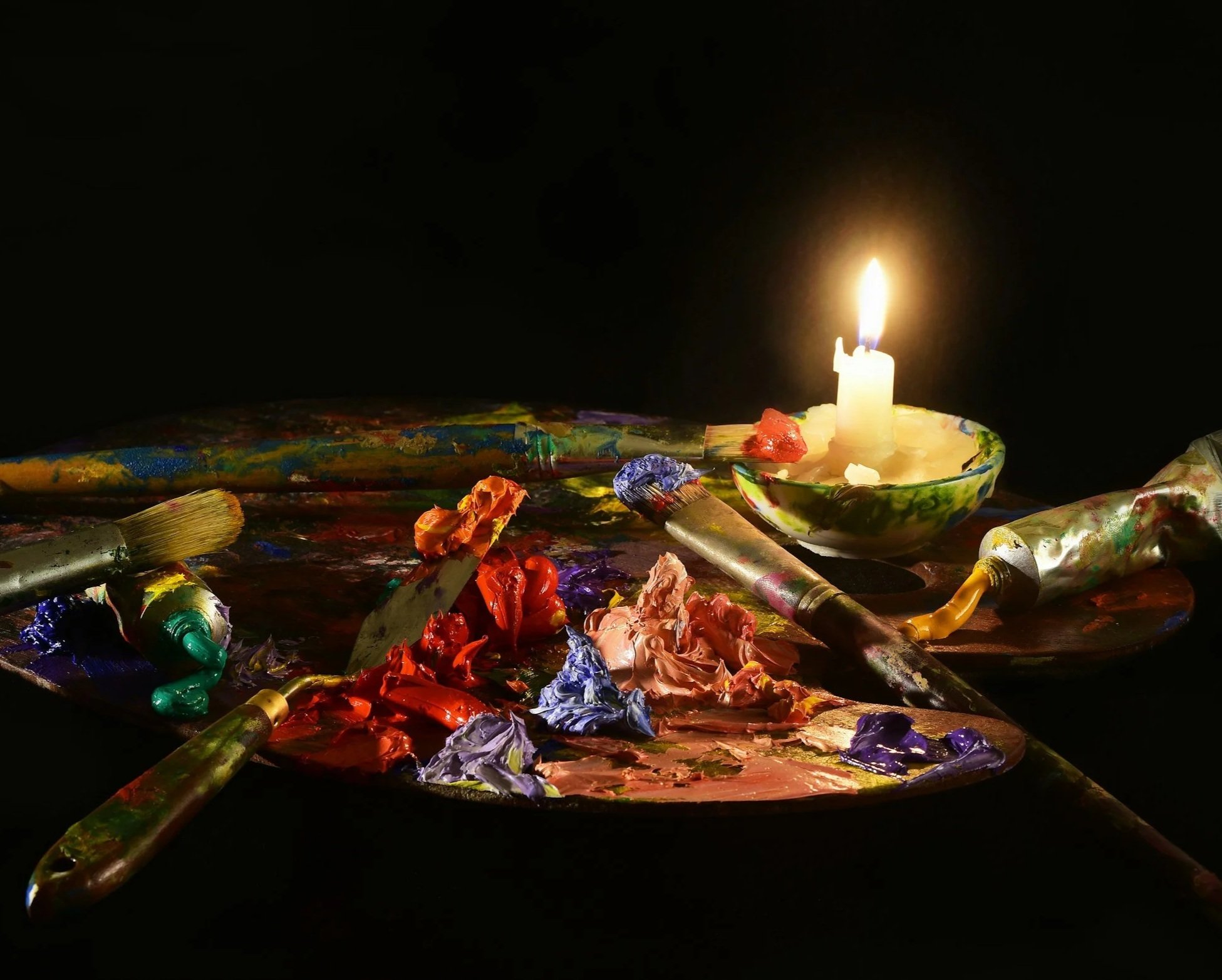
#1 - Create a Sacred Space to make “Quiet Art”: Not everything needs to be shared or validated, especially in today’s social media-centric world! Create a time and place to create just for you! Make it sacred by adding some candles, putting on peaceful (or high energy!) music that you can create to, and pray. Ask the Lord to show up for you and create with you, and for it to be a joyful, special time together. You deserve to have this safe, sacred space to play without pressure, explore without critique, and to make art that no one ever sees! This private space becomes your creative refuge—free of expectation, full of possibility. If you like, set a timer for 15 minutes. Create just for the joy of it. Don’t aim for good. Aim for real.
#2 - Surround Yourself with Creative Encouragement: Find a creative community that celebrates effort, not perfection, values exploration over outcome, and actually sees you beyond your art! Being in a healthy creative space can rewire the old story and remind you that your voice matters—even when it’s still developing.
I have the privilege of having been in international online spaces with other Christian creatives since 2017 and I can tell you that it ABSOLUTELY has transformed my own art journey. It was a major motivator for me to create a unique space for us to gather when starting Creative Café with Debra Hart Studio in 2020, and then going even deeper into community and spiritual/art practices in Creative Café SOUL Collective in 2023!
I personally invite you to consider joining us in these safe, loving spaces where we all do this creative journey together, laughing, crying, and growing along the way. :)
The Creative Perfectionist Breakup You Deserve
Breaking up with perfectionism doesn’t mean lowering your standards or giving up on excellence. It means no longer letting shame or fear steer the creative process. It means choosing growth over judgment, freedom over control, and joy over fear. As a redeemed perfectionist myself, I’ve learned that the creative life is far richer when I show up as a learner—not a performer. So whether you’re just beginning or you’ve been creating for years, give yourself permission to:
Be a beginner
Make a mess
Laugh at your mistakes
Celebrate progress, not perfection
Trust the creative process
You don’t have to prove anything. You don’t have to please anyone. You just have to show up—and create. Because the real beauty of your art isn’t in its flawlessness – it’s in its honesty, its growth, and the heart behind it. I declare over you today that you are not behind, you are not broken, you are becoming.
And that, dear beautiful artist, is more than enough!
With love in my heart for you (and happily messy hands!),
Debra
About the Artist: Debra Hart is a metro Atlanta, Georgia fine artist, writer, and creativity guide, living and working from her home studio in the Johns Creek / Duluth / Suwanee area of Gwinnett County. She loves to create beautiful art for luxury homes, offices, and professional spaces … all the while, she also delights in encouraging creatives in their journey of discovery, skill development, and overcoming barriers to loving their best creative life. A redeemed perfectionist, she approaches her life and art from a place of mystery, grace, and love of her Savior, Jesus Christ - the best Adventurer of all.